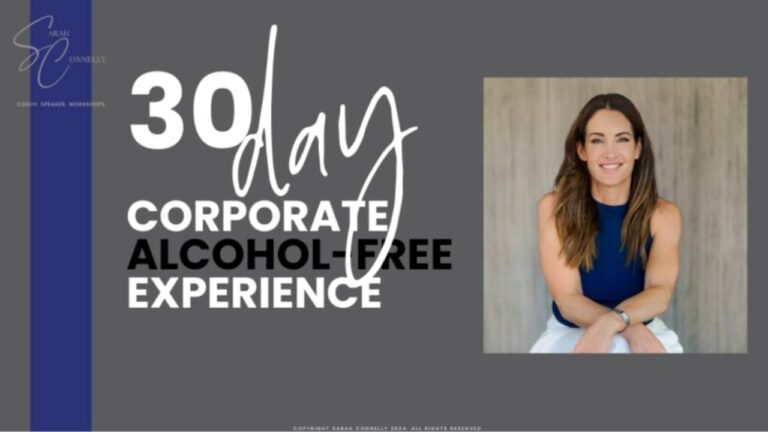

When you are running a program to support people through 30 days alcohol-free, the advice from marketing experts is to lead with the easy wins. Better sleep, weight loss, increased energy, and clarity. And those are all real. You will see them mentioned on my website.
But if we simply see removing alcohol as a shortcut to a shinier life filled with nothing but positive results, we often find ourselves back on the same merry-go-round. We stop for a while, we feel better, and then we go back. Because we stopped at the surface and never went deeper.
The real change begins when the early excitement settles. When the obvious benefits become normal. When the filter is gone and things feel a little raw. That is when the truly meaningful work begins.
Quitting drinking is not just about feeling better. It is about getting better at feeling.
What I Thought I Would Lose
When I was drinking, I often experienced a quiet sense of emptiness, especially early in the mornings. I would wake up wondering if this was it.
I was 46 at the time and had achieved most of what I had set out to achieve. Career, house, husband, children. On the outside everything looked fine. But inside I was stuck. I did not want to stop drinking because I was afraid of letting go of my emotional and social crutch. I also did not believe I was bad enough to quit. But the growing dissatisfaction inside me said otherwise.
Drinking was my escape hatch, the one thing I allowed myself. It let me feel spontaneous, a little rebellious, less serious. I did not want to be boring. But I was also deeply bored of feeling terrible.
I did not know what I would be walking into if I let it go. What if stopping made everything worse? What if the emptiness expanded?
What I Found Instead
When I finally committed fully, not just dipping in and out, my expectations shifted. There were immediate changes in sleep, energy, and clarity. But clarity brought a double-edged gift. It showed me what was working and what was not.
Suddenly I was not numbing anymore. I could no longer ignore the parts of my life that did not fit. I was sitting with the raw, unfiltered truth of my own experience.
This is the real turning point. The point where most people either go back to drinking or begin to truly take charge of their lives. Where we stop passively letting societal norms and quiet discomfort make the decisions and start making them ourselves.
Either way, drinking or not drinking, there is a void. That quiet whisper asking whether this is all there is.
If we keep drinking, the answer tends to be yes, and it usually gets worse. But if we pause long enough, we begin to see that the void is not a problem. It is an invitation.
The Void Is Full of Information
Most people I work with have tried to quit before. They have read the books, listened to the podcasts. They are smart and self-aware. But they keep ending up in the same place.
The reason is almost always the same. They did not stay with the discomfort long enough to find out what was underneath it.
The void is not a blank space filled with despair. It is filled with old beliefs and patterns that have been quietly driving behaviour for decades. Beliefs like: I am not good enough. I have to handle everything myself. I must keep others happy. If I stop pushing I will fall apart.
These are not passing thoughts. They are deeply held ideas that formed long ago and have been running in the background ever since. When alcohol goes away, the volume on these beliefs often gets louder.
But here is the truth that changed my life. You are not your beliefs. You did not choose them consciously. And you can change them.
With the clarity that comes from being alcohol-free, you become the observer of these patterns rather than the person being run by them. You take charge and build from a foundation that is actually yours.
It Begins With Courage
Courage in this context is not glamorous. It is not a dramatic declaration or a public gesture. It is quieter than that.
It is looking at an old belief and being willing to ask whether it is actually true. It is asking for help when your instinct is to handle everything alone. It is showing up alcohol-free to situations you used to drink your way through. It is learning to rest without needing to escape first.
Every time you act from a new, more honest belief, you prove something to yourself. You did not fall apart. And that proof, repeated over time, is what genuinely changes how you see yourself.
Repetition and emotion created the old patterns. Repetition and emotion, directed differently, can build new ones.
Every time you pause instead of pour, reach out instead of retreat, reflect instead of numb, you are building a new version of how you move through the world.
The Void Is the Beginning
The emptiness you are afraid of is not the end of something good. It is the start of something real.
It is the uncomfortable, fertile space where clarity and courage grow. It is where you begin to ask the question that changes everything.
If I am not the person who numbs, doubts, and performs for others, who do I choose to become instead?
That question does not come with pressure. It comes with possibility.
Palliative care nurse Bonnie Ware documented the most common regrets shared by people at the end of their lives. The themes that came up most often were wishing they had lived more honestly and true to themselves, spent less time working and more time with people they loved, had the courage to express their feelings, been more present, and forgiven more.
Without alcohol you will see your life more clearly. That clarity will change things. But things will change either way. The only question is whether you are the one directing the change or whether you are waiting for circumstances to force it.
Facing what is underneath the drinking is, in my experience, the most significant benefit of taking time away from alcohol. It is not easy to put into a headline. But it is extraordinary.
If you want to understand more about the beliefs that keep people stuck in the drinking cycle, how to change the beliefs that keep you drinking is worth reading next. And when you are ready to explore what real change looks like with support, find out more about working with Sarah Connelly.
Love, Sarah