
From Overindulgence to Overcorrection: The Cycle That Keeps You Stuck
Dec 28, 2025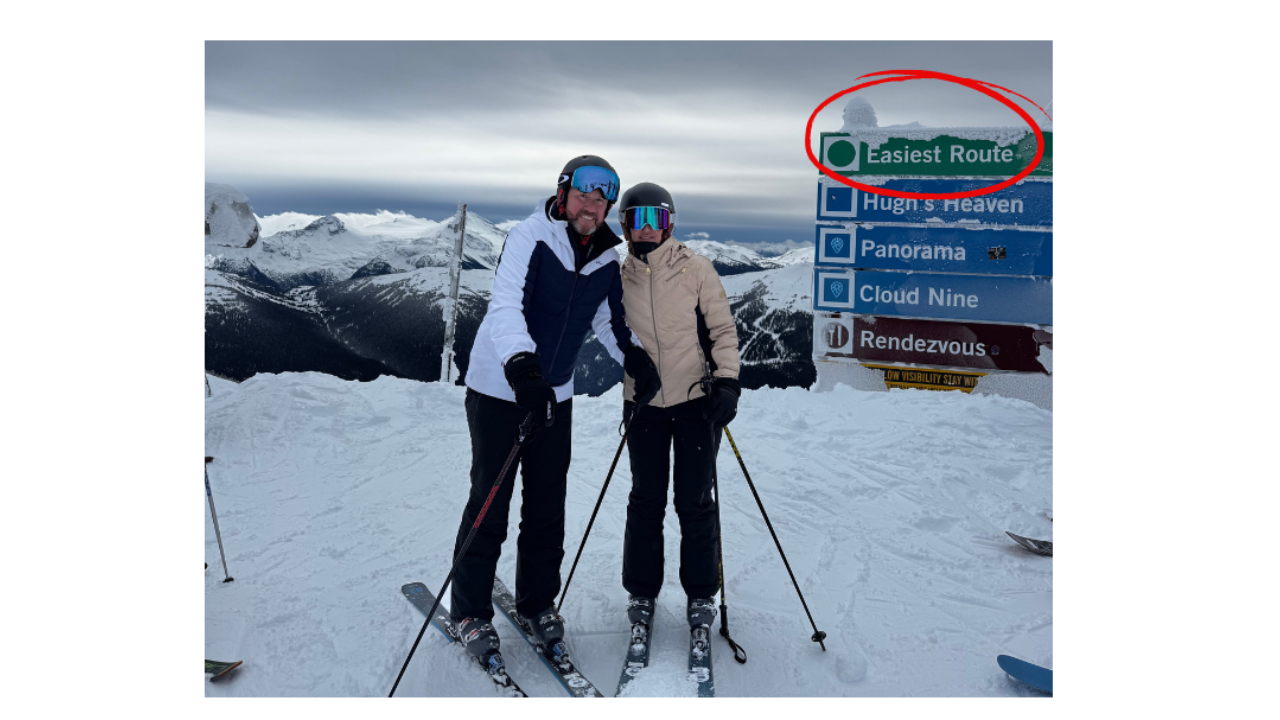
Dear Friends,
It’s 8pm on Boxing Day, and we’ve just come back to my mother-in-law’s after a three-week trip to Canada, followed by two days with family celebrating Christmas. It’s been an incredible few weeks, and I am feeling full in every sense of the word. Some of my fullness is wonderful, and some, namely the fullness of my jeans, is not so wonderful...
How are you feeling?
My sincere hope is that you are feeling positive, no matter what has occurred these last few weeks – a time that can be highly emotive, triggering and stressful, regardless of how much enjoyment comes with it all. If you’re anything like me, you will have set intentions - perhaps not to eat or drink too much, to be patient and calm, and to start 2026 on the ‘right’ foot. So what happens if (inevitably) these intentions were not fully realised?
Expectation Or Intention?
If we set expectations and fall short, chances are we’ll start 2026 beating ourselves up, feeling disappointed and even ashamed of our failure. Our inner critic will drag us into 2026 with even higher, harsher demands, forcing us to adhere to extreme regimens and all-or-nothing behaviours that promise long-term change through strict discipline and ultimately pain. If you’ve tried this before, and you’re about to try again, stop. It doesn’t work because if it did, you’d have succeeded already.
Intentions are different; they are guidelines and signposts aligned to our values and hopes for ourselves and our lives. They are grounded in positive intent for our own well-being, yet flexible and realistic. Intentions consider context, and the inevitable unexpected. They give space for ‘good enough’ and even the occasional ‘failure’. They are forgiving whilst setting boundaries, so we don’t go completely off track.
My suggestion for you, as we head into a new year, is to consider whether you live in a cycle of high expectations, followed by failure and self-flagellation.
Because if you do, you’re not alone, and there is a better way.
The cycle (and why it keeps repeating)
Most people I work with don’t “lack discipline.” If anything, they have too much of it — or at least, they have a voice inside that has trained them to respond to discomfort with pressure.
That inner critic can look like motivation on the surface… but underneath, it’s often relentless. It tells you you’re behind, failing, not doing enough, not being enough — and it keeps moving the goalposts.
And when you’ve been driven by that voice for years, the nervous system eventually looks for an off-switch. For many of us, that off-switch has been wine o’clock, holiday “treats,” scrolling, overworking, overshopping, or anything that numbs the internal pressure for a moment.
So we wobble (because we’re human), then we panic… and then we try to fix it with force.
Overindulge → regret → extreme plan → white-knuckle → slip → shame → repeat.
This isn’t a character flaw. It’s a pattern.
And it’s why all-or-nothing goals are so seductive — they promise certainty. But they rarely create change.
The real issue isn’t willpower — it’s the approach
Here’s one of the most freeing re-frames I know:
You don’t need more shame to change. You need more understanding.
Because shame doesn’t teach your brain anything new, it just activates the threat system and narrows your thinking. Compassion, on the other hand, calms the system and gives you access to choice.
So instead of launching into a punishing January, what if you chose a compassionate experiment? Not a life sentence. Not a personality overhaul. Just a clear, kind, time-bound reset.
The Compassionate Goal Formula
If you want a goal that actually supports change (and doesn’t trigger rebellion), build it with these three ingredients:
1) A time limit
Forever is too big for the human brain. (And it’s especially too big when you’re tired and full and coming down from Christmas.)
Choose a window:
- 7 days
- 14 days
- 30 days
Contained. Doable. Nervous-system friendly.
2) Wiggle room
Wiggle room isn’t permission to spiral — it’s permission to be human.
It sounds like:
- “If I slip, I don’t self-destruct.”
- “I return to my intention at the next decision.”
- “I don’t burn the house down because I dropped a match.”
3) A learning lens
This is the part that changes everything.
Instead of: “What’s wrong with me?”
Try: “What did I need in that moment?”
A few powerful questions (borrow these and make them yours):
- “What did I really need in that moment?”
- “What was I trying to avoid or soothe?”
- “What’s a new path I can gently explore instead?”
This is how you build self-trust — not through perfection, but through honesty and repetition.
A quick reset you can do in 90 seconds (because December is a lot)
If you’re reading this feeling a bit frayed — mentally, emotionally, physically — don’t underestimate the power of a tiny regulation practice.
Here are a few “micro-shifts” (90 seconds or less):
- Long deep breaths or box breathing ( in for 4, out for 4)
- Cold water on wrists/back of neck
- A two-minute walk with long exhales
- Co-regulate (message someone who gets it and name one feeling + one need)
These aren’t fluffy. They’re a way of telling your body: “This is not an emergency.” And when your body responds to this message, your brain makes better decisions.
Also: remember that most of us don’t fall apart from one big thing — we slide from the ten small things we didn’t recover from. So build tiny “recovery reps” between stressors.
A simple 7-day experiment (starting whenever you choose)
If you want something concrete, here’s a gentle plan that works beautifully after the festive season:
Daily
- One 60–90 second regulation practice
- One micro-recovery between demands
Twice this week
- Co-regulate intentionally (voice note or a walk with someone who gets it)
Once this week
- Practise presence with a known trigger (prepare, connect, recover)
End of week
- Ask: “Where did my actions help me make a better choice?”
No drama. No perfection. Just reps.
A final word before you “start again”
If today you’re sitting in discomfort — the physical kind, the emotional kind, or both — please don’t use it as evidence that you’ve failed.
Use it as information.
Change happens slowly, steadily, intelligently — with support, and with curiosity (not labels, not shame, not all-or-nothing identity stories).
So as we walk toward a new year, my wish for you is this:
May your goals be kind.
May your expectations be realistic.
May your “reset” be an experiment — not a punishment.
And may you begin again, as many times as you need to.
Warmly,
Sarah Connelly


